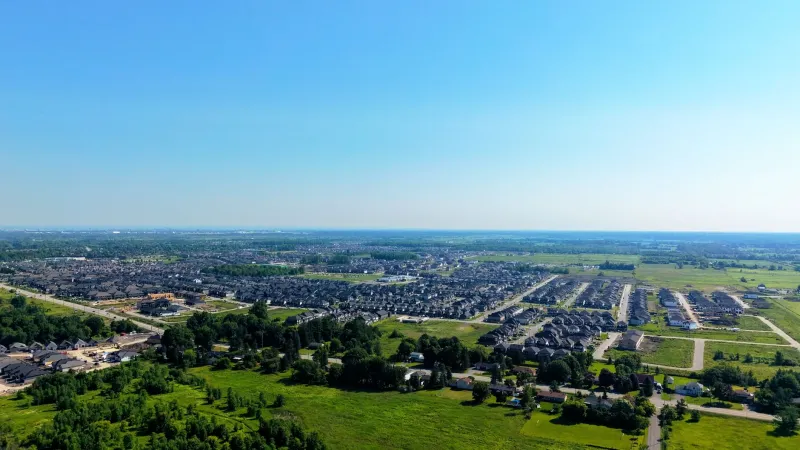
Zip Code Gold Rush: How Auction Buyers Are Profiting From Overlooked Neighborhoods Before the Crowd Arrives
In competitive real estate markets, the most rewarding opportunities rarely announce themselves. They surface quietly—in auction rooms where fewer paddles are raised, in neighborhoods where streetlights outnumber coffee shops, and in zip codes that haven't yet appeared on a national magazine's "Best Places to Live" list. For buyers who know how to read the signals, this relative obscurity is precisely the point.
At HomesBidding, we refer to this strategy as neighborhood arbitrage: the disciplined practice of identifying geographic value gaps before the broader market closes them. It is not speculation. It is pattern recognition applied to auction data, civic investment, and demographic momentum.
Why Auction Data Tells a Different Story Than the MLS
Public auction records offer something the traditional multiple listing service cannot—unfiltered market behavior. When a property in a transitional neighborhood attracts twelve competing bids instead of the customary three or four, that competitive pressure is a measurable signal. It indicates that informed buyers, often institutional or semi-professional investors, have already performed their analysis and concluded that the area warrants serious attention.
Platforms like HomesBidding aggregate bid counts, final sale prices, and days-to-close across thousands of auction transactions. When those metrics begin trending upward in a specific zip code—particularly one that has historically underperformed regional averages—the data is worth examining closely. A single strong auction result is noise. Six consecutive results above assessed value, spread across a six-month window, constitute a pattern.
Smart buyers track these clusters. They are not chasing headlines. They are reading the ledger.
The Infrastructure Signal: Follow the Cranes, Not the Headlines
Government and private capital rarely flows quietly. Before a neighborhood becomes desirable to the general public, it typically receives measurable infrastructure investment—and that investment leaves a clear paper trail.
Consider what has happened in select corridors of cities like Columbus, Ohio; Raleigh, North Carolina; and San Antonio, Texas over the past decade. In each case, transit expansion projects, highway interchange improvements, or federally funded opportunity zone designations preceded significant residential appreciation by eighteen to thirty-six months. Buyers who tracked municipal budget allocations and Department of Transportation project filings—rather than waiting for Zillow trend reports—entered those markets at a meaningful discount.
The practical implication for auction buyers is straightforward: before submitting a bid on a property in an unfamiliar area, consult the city's capital improvement plan. These documents are public record and typically outline five-year infrastructure priorities. A planned light rail stop, a new school construction project, or a federally approved brownfield remediation initiative can fundamentally alter a neighborhood's trajectory. Winning a property at auction twelve months before that announcement becomes public knowledge is not luck. It is research.
Demographic Momentum: Reading Population Shifts Before They Become Talking Points
Beyond brick-and-mortar investment, human migration patterns are among the most reliable precursors to neighborhood appreciation. The United States Census Bureau releases annual American Community Survey estimates that track population change, median age shifts, household income trends, and educational attainment at the census tract level. These datasets are granular enough to reveal meaningful movement years before it registers in home price indices.
Specifically, auction buyers benefit from monitoring the following demographic signals:
- Net in-migration from higher-cost metros. When residents of Los Angeles, New York, or Chicago relocate to secondary cities, they often bring purchasing power that reshapes local price ceilings. Cities like Boise, Idaho; Huntsville, Alabama; and Greenville, South Carolina have each experienced this dynamic in recent years.
- Rising median age in adjacent, established neighborhoods. When homeowners in a desirable district age in place, younger buyers are pushed into bordering areas—gradually elevating demand and prices in those transitional zones.
- Increasing share of college-educated residents. Educational attainment correlates strongly with long-term neighborhood stability and commercial investment. A rising percentage of degree holders in a zip code often precedes retail development and restaurant openings that further accelerate desirability.
Cross-referencing these demographic trends with auction bid frequency in the same geographic area creates a compelling composite picture. When the data streams converge, the case for bidding becomes substantially stronger.
Regional Case Study: The Mid-South Corridor
One of the more instructive recent examples of neighborhood arbitrage at scale can be found in the Mid-South corridor stretching from Memphis, Tennessee into northern Mississippi. For years, auction properties in certain Memphis zip codes—particularly those adjacent to the medical district and the South Main Arts District—attracted limited competitive interest. Assessed values were low, bid counts were minimal, and the neighborhoods carried reputational baggage that discouraged casual buyers.
However, between 2019 and 2023, a convergence of factors quietly shifted the calculus. The expansion of St. Jude Children's Research Hospital's campus brought thousands of high-income medical professionals to the region. Opportunity zone tax incentives attracted commercial development. And auction data on HomesBidding and similar platforms began reflecting a marked increase in bidding activity on residential properties within a two-mile radius of the hospital campus.
Buyers who entered those auctions in 2020 and 2021, armed with demographic research and infrastructure awareness, acquired properties at prices that by 2024 had appreciated significantly above their purchase cost. The neighborhood had not been a secret—it simply had not yet been validated by mainstream media attention. Auction buyers who trusted their data did not need that validation.
Building Your Own Neighborhood Arbitrage Framework
The process is replicable. Buyers who wish to apply this strategy systematically should consider the following approach:
- Identify a radius. Select a target metropolitan area and define two or three zip codes adjacent to established, high-demand neighborhoods. Proximity to desirability matters.
- Pull auction transaction history. Review the past twelve to twenty-four months of auction results in those zip codes. Note bid counts, sale-to-assessed-value ratios, and velocity of transactions.
- Consult municipal capital improvement plans. Access city and county planning documents. Flag any infrastructure projects scheduled within a three-year window.
- Review Census ACS data. Examine population change, income trends, and migration patterns at the census tract level.
- Assess commercial investment signals. Business license applications, building permit filings, and commercial lease activity are often available through city planning portals and offer early evidence of retail and service sector interest.
- Establish a bid ceiling based on current—not projected—value. Arbitrage is only profitable when entry prices remain disciplined. Do not pay for anticipated appreciation. Bid on what the property is worth today, and allow the market to deliver the upside.
The Discipline That Separates Strategy From Speculation
Neighborhood arbitrage is not a guarantee. Infrastructure projects are delayed. Demographic trends reverse. Opportunity zones expire without delivering anticipated development. The framework described here reduces risk through evidence—it does not eliminate it.
What distinguishes a disciplined auction buyer from a speculator is the willingness to walk away when the data is incomplete or when bid competition has already priced in the anticipated appreciation. The auction format is unforgiving of emotional decision-making. When the gavel falls, the price is final.
The buyers who consistently find value in overlooked markets are those who arrive at the auction having already done the work—not those hoping the neighborhood will eventually justify what they paid. At HomesBidding, that preparation is the foundation of every smart bid.